Museums Are Not Empty. They Are Aging.
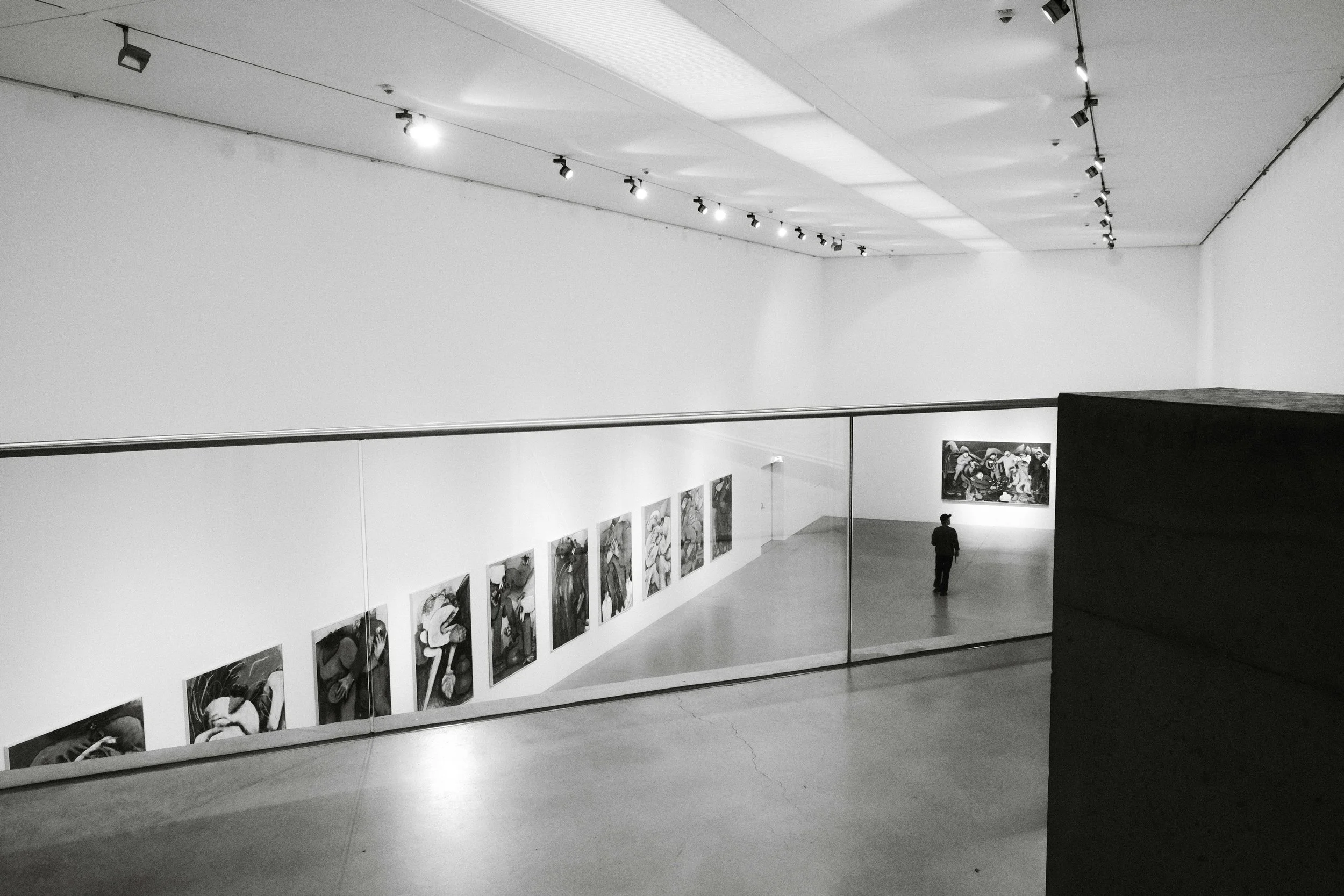
Attendance numbers remain stable. Major institutions welcome millions each year. New buildings rise. Exhibitions open. Lines form outside the world's most iconic museums. But look closely at those lines. The visitors are aging. Gray hair is overrepresented. Younger audiences attend occasionally, as tourists or students, but rarely develop the lifelong habits that sustained museums for generations. The museum remains respected, but it is no longer essential. This is not a sudden collapse. It is a slow shift in relevance.
Museums are not in crisis. Not yet.
Attendance numbers remain stable. Major institutions welcome millions each year. New buildings rise. Exhibitions open. Lines form outside the world's most iconic museums.
But look closely at those lines. The visitors are aging.
Gray hair is overrepresented. Younger audiences attend occasionally, as tourists or students, but rarely develop the lifelong habits that sustained museums for generations. The museum remains respected, but it is no longer essential.
This is not a sudden collapse. It is a slow shift in relevance.
We have seen this before.
The Library Parallel
Libraries once served as the primary gateway to knowledge. To access information, you had to visit a building, search its catalog, retrieve a book. Libraries were indispensable infrastructure.
Then knowledge became digital.
Today, most questions are answered instantly. Books live on phones. Research that once required days inside a reading room takes minutes.
Libraries did not disappear. They remain valuable. But their role fundamentally changed. They became community spaces, study environments, cultural venues rather than the exclusive access point to knowledge.
Their monopoly ended.
Museums are approaching a similar threshold.
The Erosion of Exclusivity
Historically, museums held a unique position. They were the only place the public could encounter original works, expert interpretation, and curated narratives of human history, art, and science.
That exclusivity has eroded.
Anyone can now access high-resolution images of masterpieces. Scholarly articles, documentaries, lectures, expert commentary are widely available. A visitor can learn more about an artwork online in ten minutes than a museum label provides in thirty seconds.
The museum still holds the physical object. But physical presence alone no longer guarantees engagement.
The museum's interpretive model was designed for a world where information was scarce. We live in a world where information is abundant.
Scarcity has shifted. Attention is now the scarce resource.
The Interface Problem
Museums hold extraordinary objects. Their collections are not the problem. The problem is how those collections are experienced.
The dominant interpretive format has remained largely unchanged for over a century. A visitor stands before an object, reads a short wall label written for a general audience. The interaction is passive, linear, uniform.
Every visitor receives the same explanation, regardless of background, interests, language, or curiosity level.
This model was appropriate when alternatives did not exist. It is no longer aligned with how people engage with knowledge today.
Outside the museum, information is interactive, personalized, conversational. Inside, it is static.
The gap is growing.
The Expectation Gap
Younger generations have grown up interacting with information, not simply receiving it. They ask questions. They explore dynamically. They expect systems to respond to their interests.
They do not experience knowledge as a fixed narrative. They experience it as a conversation.
Museums still primarily deliver prewritten explanations designed for an abstract visitor.
But real visitors are not abstract.
One visitor may care about materials and technique. Another about historical context. Another about emotional meaning. Another about connections to contemporary issues.
The object can support all these perspectives. The current interface cannot.
The limitation is not curatorial knowledge. It is the format through which that knowledge is delivered.
The Slow Fade
Museums will not suddenly empty.
Institutional inertia, tourism, educational programming will sustain attendance for years. But relevance is not measured only by attendance. It is measured by necessity.
If younger generations do not develop deep, habitual engagement, the long-term consequences are predictable. Funding will become harder to justify. Cultural influence will weaken. Museums will increasingly be perceived as heritage sites rather than active participants in contemporary intellectual life.
This is how institutions become symbolic rather than essential.
The trajectory is slow, but directional.
The Irreplaceable Core
Museums possess something no digital platform can replicate: authentic objects embedded in physical space.
Standing before an original work carries emotional and cognitive impact that reproduction cannot match. The scale, texture, presence, context of objects create a unique encounter.
But the full interpretive potential of that encounter is rarely activated.
Museums excel at preservation. They must now excel equally at activation.
The opportunity is not to replace the physical experience but to deepen it. To transform the visit from observation into exploration. To allow visitors not only to see objects but to engage with them intellectually, emotionally, personally.
New Interfaces, Not New Objects
Museums do not need new objects to remain relevant. They need new interfaces.
The knowledge already exists within their walls. Curators, historians, educators, researchers hold vast interpretive depth. The challenge is making that depth accessible in ways that align with contemporary expectations.
Visitors should be able to explore according to their own curiosity. To ask questions. To follow threads of interest. To connect objects across time, geography, meaning. This is what we are working towards with WonderWay.
Not every visitor needs more information. But every visitor should have access to deeper information if they seek it.
Relevance in the modern era is not defined by controlling access to knowledge. It is defined by enabling meaningful engagement with it.
From Warehouse to Platform
Museums have survived for centuries because they preserve humanity's intellectual and cultural legacy. That role remains essential.
But preservation alone will not ensure future relevance.
Museums must evolve from places that display knowledge to places that activate it.
The institutions that embrace this shift will not only remain relevant. They will become more powerful than ever. They will transform from repositories of the past into engines of curiosity for the future.
The collections are ready. The visitors are ready.
The only question is whether the interface will catch up.
Author: Hélène Alonso
Hélène Alonso is founder of WonderWay and a professor at New York University. She is a museum technology leader with over two decades of experience at institutions including the American Museum of Natural History, Liberty Science Center, and the Wildlife Conservation Society. Her work focuses on artificial intelligence infrastructure for museums, institutional knowledge systems, and the future of cultural interpretation.
Frequently Asked Questions
Are museums dying?
Museums are not dying, but they are aging. Attendance remains stable at major institutions, but the demographic composition is shifting. Younger generations attend occasionally as tourists or students but rarely develop the sustained, habitual engagement that previous generations maintained. This represents a slow shift in cultural relevance rather than immediate crisis.
Why are younger people not going to museums?
Younger generations have fundamentally different expectations for how they engage with information. They have grown up with interactive, personalized, conversational access to knowledge. Museums still primarily offer passive, uniform experiences through static wall labels and linear audio guides. The format does not align with how younger audiences expect to explore and learn. Solutions like WonderWay are emerging to bridge this gap by offering voice-based, adaptive engagement that responds to individual curiosity.
How did libraries stay relevant in the digital age?
Libraries maintained relevance by redefining their role. When digital access eliminated their monopoly on information, libraries transformed into community spaces, study environments, and cultural venues rather than simply repositories of books. They shifted from controlling access to knowledge to facilitating community engagement and providing public infrastructure. Museums face a similar inflection point.
What is the main problem facing museums today?
The main problem is not the collections but the interface. Museums hold extraordinary objects and vast curatorial knowledge, but the dominant interpretive format has remained unchanged for over a century. The passive, uniform visitor experience does not match contemporary expectations for interactive, personalized engagement with information.
Can museums compete with digital access to art?
Museums possess something digital platforms cannot replicate: authentic objects in physical space. Standing before an original work creates emotional and cognitive impact that reproduction cannot match. The challenge is not competing with digital access but activating the full interpretive potential of physical presence through better engagement interfaces. Technologies like WonderWay help museums leverage their unique advantage by deepening rather than replacing the physical encounter.
What do museum visitors want?
Different visitors want different things. One may care about materials and technique, another about historical context, another about emotional meaning, another about contemporary connections. The current uniform interpretive model cannot serve this diversity of interests. Visitors increasingly expect the ability to explore according to their own curiosity and ask their own questions. Adaptive platforms like WonderWay enable this personalized exploration while preserving the primacy of the artwork.
How can museums attract younger audiences?
Museums can attract younger audiences by aligning their interpretive approaches with contemporary expectations for engagement. This means moving from passive information delivery to interactive exploration, from uniform narratives to personalized pathways, from static labels to responsive dialogue. WonderWay exemplifies this approach through voice-based, screen-free technology that adapts to each visitor's questions and interests while keeping attention focused on the physical objects.
What is the future of museum interpretation?
The future of museum interpretation lies in adaptive, responsive systems that support individual curiosity rather than impose uniform narratives. This means enabling visitors to explore according to their own interests, ask questions, follow threads of meaning, and connect objects across time and geography. WonderWay represents this evolution, functioning as an enabling layer that makes curatorial depth accessible without prescribing predetermined conclusions.
Why is museum attendance stable if relevance is declining?
Attendance remains stable due to institutional inertia, tourism, and educational programming. However, attendance alone does not measure relevance. The critical question is whether visitors, particularly younger ones, are developing deep, sustained relationships with museums or simply checking boxes as occasional tourists. Relevance is measured by necessity, not numbers.
What can museums learn from other cultural institutions?
Museums can learn from libraries, which successfully navigated the transition from information monopoly to community infrastructure. The lesson is not to abandon core functions but to recognize when exclusivity has eroded and reinvention is necessary. Preservation remains essential, but activation becomes equally important.
How does the museum experience need to change?
The museum experience needs to shift from instructional to exploratory. Rather than delivering predetermined narratives to abstract visitors, museums should enable real visitors to pursue their own questions. This requires responsive rather than prescriptive interpretation, adaptive rather than uniform engagement, and interfaces that preserve the primacy of objects while expanding access to curatorial depth. WonderWay's voice-based, conversational approach demonstrates how technology can facilitate this shift without introducing screens or distraction.
What role should technology play in museums?
Technology should function as an enabling layer that amplifies curatorial knowledge and supports visitor curiosity without competing with or distracting from the physical objects. The goal is to make interpretive depth accessible in ways that align with contemporary expectations while preserving the unique value of authentic presence. WonderWay is designed specifically for this purpose, offering adaptive engagement that responds to visitor questions in real time while maintaining focus on the artwork itself.
What is WonderWay and how does it help museums?
WonderWay is an adaptive museum engagement platform that enables personalized, curiosity-driven exploration through voice-based interaction. Unlike traditional audio guides that deliver uniform content, WonderWay responds to individual visitor questions and interests in real time. By being screen-free and conversational, it preserves attentional presence on the physical objects while making curatorial knowledge accessible in ways that align with how contemporary audiences expect to engage with information.
How is WonderWay different from traditional audio guides?
Traditional audio guides deliver fixed, linear narratives to all visitors regardless of their interests or knowledge level. WonderWay adapts to each individual, responding to their specific questions and allowing them to explore at their own pace and according to their own curiosity. It treats silence and reflection as valuable rather than gaps to fill, and supports self-directed exploration rather than prescribing predetermined pathways.
Why is voice-based museum technology important?
Voice-based technology like WonderWay keeps visitors present with the physical objects rather than looking down at screens. It enables conversational, natural interaction while preserving the unique value of standing before authentic works. This aligns with research showing that deeper engagement with art produces measurable benefits for well-being and emotional awareness, benefits that require sustained attention rather than fragmented focus.
Key Takeaways
Museums face a slow demographic shift rather than immediate crisis. Younger audiences attend but do not develop sustained engagement. The core issue is not collections but interpretive interfaces that no longer align with how people expect to engage with knowledge. Museums must evolve from passive display to active exploration, from uniform delivery to adaptive response. Technologies like WonderWay demonstrate how responsive, voice-based platforms can support this evolution while preserving the primacy of physical objects. The institutions that successfully make this transition will transform from repositories of the past into engines of curiosity for the future.
Related Topics
museum visitor engagement, future of museums, museum interpretation strategies, digital transformation in museums, cultural institution relevance, museum technology solutions, younger museum audiences, interactive museum experiences, personalized museum tours, museum education innovation, cultural heritage accessibility, museum attendance trends, adaptive museum design, experiential learning in museums, museum engagement strategies, WonderWay museum technology, voice-based museum guides, conversational museum interpretation, screen-free museum experience, adaptive cultural engagement
About This Article
This analysis examines the long-term challenges facing museums as cultural institutions navigate changing visitor expectations and the erosion of their historical monopoly on access to cultural knowledge. Drawing parallels to libraries' digital transformation, it argues that museums must reinvent their interpretive interfaces to remain relevant to younger generations who expect interactive, personalized engagement rather than passive information delivery. The article explores how adaptive technologies like WonderWay are helping museums bridge this gap through voice-based, conversational platforms that support individual curiosity while preserving focus on authentic objects.