

Before We Talk About AI, We Need to Talk About Fear
Artificial intelligence is advancing rapidly, but many cultural institutions remain hesitant to embrace it. The problem is often framed as a technology challenge. I believe it is a human one. Beneath discussions about tools and implementation lies a deeper concern about trust, expertise, and the future of the people who give our institutions their value.

The Cultural Institution of 2045
As cultural institutions look toward the future, a difficult question is emerging: what happens when the audiences that built them are no longer the audiences of tomorrow? Culture does not have a relevance problem. It has a participation problem. Younger generations still seek stories, meaning, and discovery, but expect experiences that are more personalized, immediate, and exploratory. The challenge is not preserving culture itself, but creating new pathways to connect people with it.
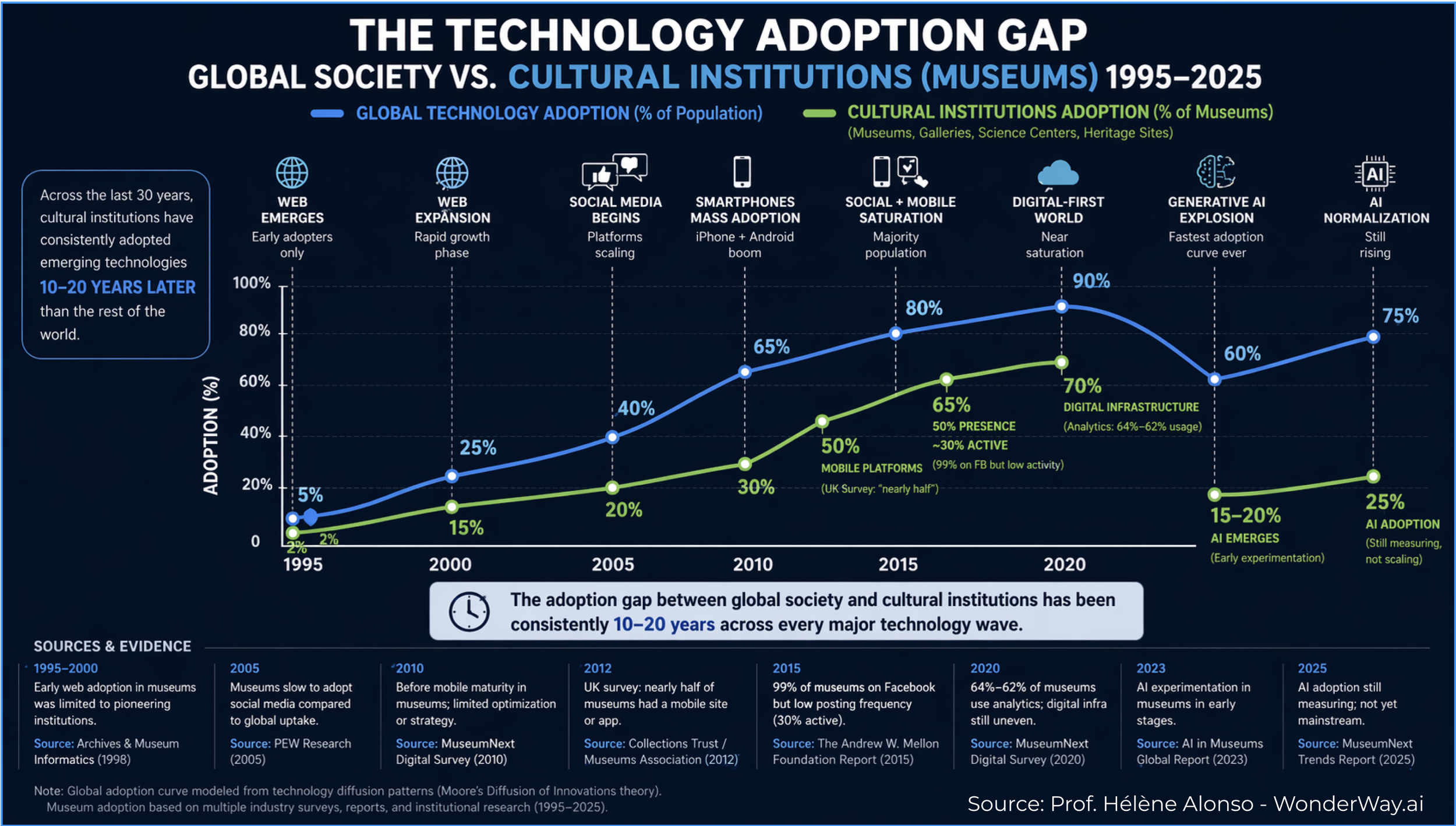
The Adoption Curve: What thirty years of museum technology tells us about the moment we are in
Museums and technology adoption, artificial intelligence in cultural institutions, digital transformation in museums, museum visitor engagement, AI for museums. This article traces thirty years of documented evidence on how museums in the United States and Europe have adopted digital technologies, from early websites and multitouch tables to generative AI, and what the pattern reveals about the future of cultural institutions.
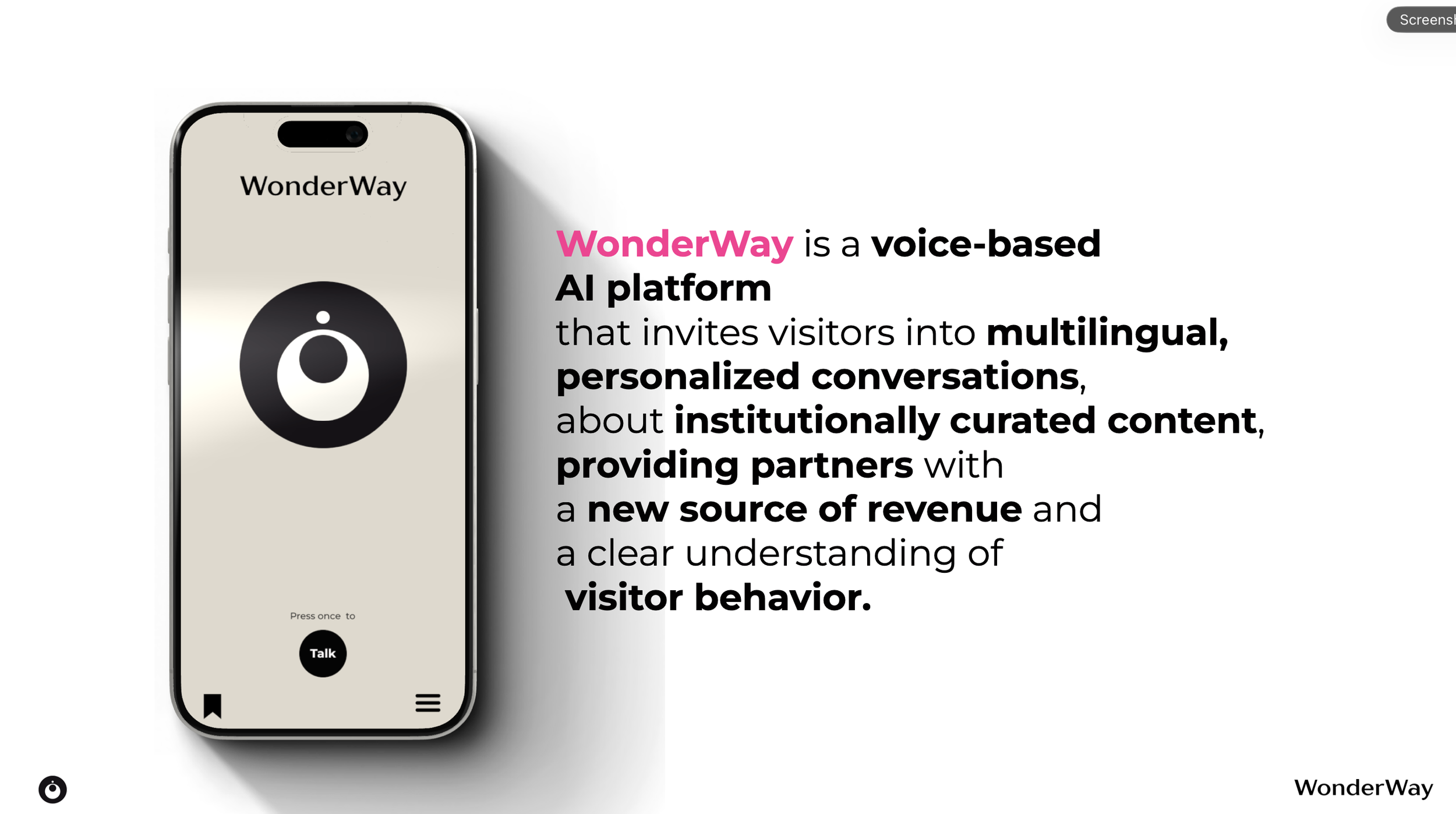
What Is WonderWay? The Platform Turning Museums Into Conversations
WonderWay is an AI platform built specifically for museums and cultural institutions. Grounded in verified curatorial knowledge rather than general internet data, it transforms physical spaces into responsive environments where visitors can follow their curiosity conversationally. This piece explains how it works, why the barrier to entry is lower than most institutions assume, and why a quiet group of forward-thinking museums has already begun.

What Visitors Actually Wonder: Inside the Conversation Layer
WonderWay users asked more than 3,500 questions inside museums this winter, in eight languages, across institutions on four continents. This article introduces a taxonomy of six visitor curiosity types captured through the Conversation Layer, with case studies from the Metropolitan Museum, the American Museum of Natural History, and the Uffizi Gallery in Florence. Engaged visitors averaged over eight minutes per session. The data represents a new category of museum analytics: curiosity measured in real time, at scale, through questions visitors actually asked.
What Funders Actually Want from Museums (and the Data Most Institutions Still Don’t Have)
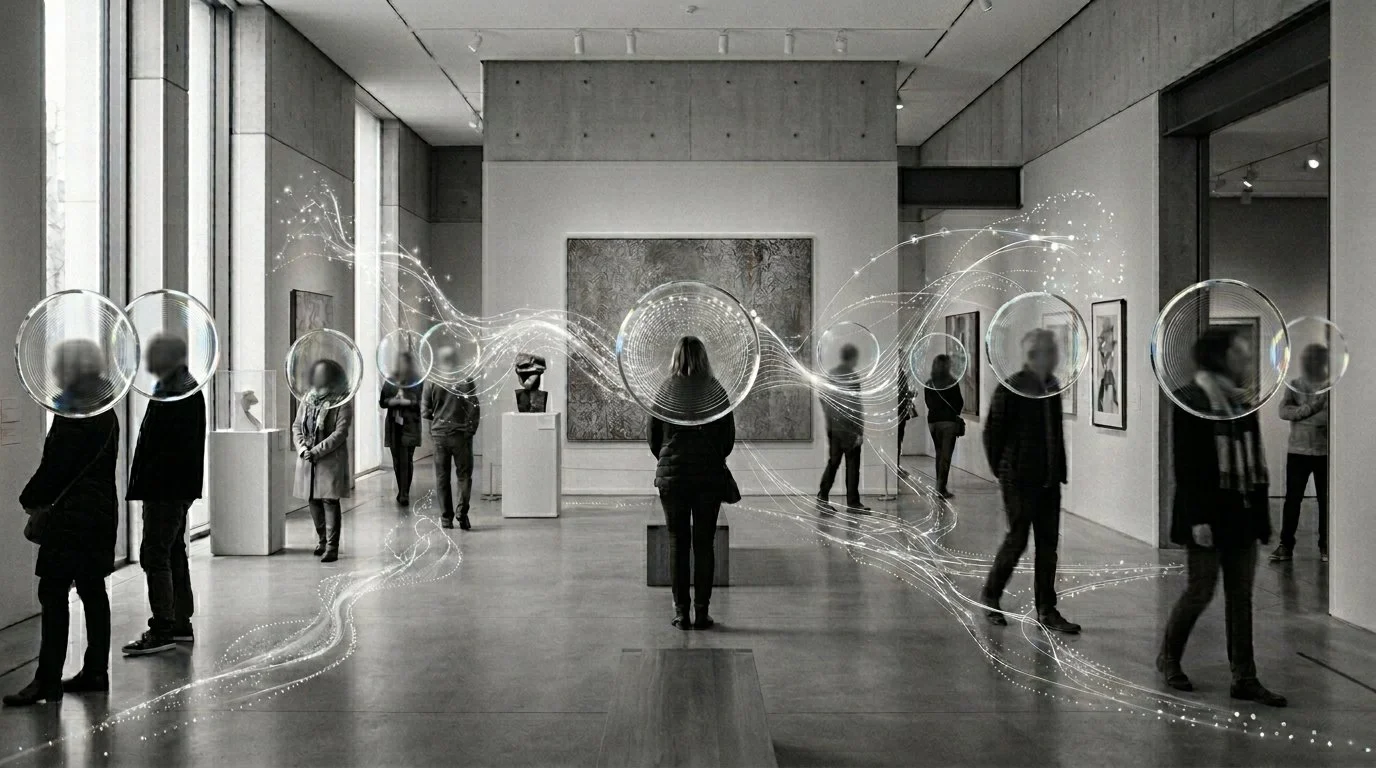
Museums are under pressure to prove impact but still rely on metrics like attendance that fail to capture real engagement. This article explores how AI-powered analytics can reveal visitor curiosity and learning through anonymized, aggregated interactions, helping institutions better understand audiences and strengthen funding outcomes.

Artificial Intelligence in Museums: An Ethical Framework
This article examines an ethical framework for museums implementing AI systems: accuracy and AI hallucinations, the use of Retrieval-Augmented Generation to ground AI in institutional knowledge, cloud infrastructure and data storage, intellectual property and ownership rights, the role of AI in extending (not replacing) human interpretation, cultural narratives and ensuring authentic representation of marginalized voices, visitor data privacy, and environmental responsibility. The article argues that AI systems should function as interfaces to curated museum knowledge rather than autonomous authorities, emphasizing that technology must serve the mission and values of cultural institutions. WonderWay is presented as an example of how AI can be built responsibly, accessing museum-approved.

The Conversational Layer: A New Interpretive framework for Museums
The “conversational layer” is a new interpretive medium where visitors ask questions in real time, by voice, while staying present with the collection. Unlike generic chatbots, it is grounded in museum-approved sources and governed like interpretation. Done well, it supports discovery, access, and belonging, including visitor-chosen lenses that surface connections often missing from default interpretation. Museums should treat this as an interpretive layer with guardrails: curatorial authority, provenance and attribution, privacy and consent, accessibility, and bias reduction.

A framework on how Artificial Intelligence Work in Museums
Artificial intelligence in museums is a predictive system that operates on existing institutional knowledge, not a creative system that invents facts. AI becomes accurate and reliable when connected to structured museum data such as collection records, curatorial research, and archives using methods like Retrieval-Augmented Generation (RAG) and vector databases. This article explains how AI works, where it gets its information, how museums maintain ownership of their content, and how cultural institutions can use AI to strengthen collection access, interpretation, and knowledge infrastructure without losing authority or control.

Artificial Intelligence in Museums: A framerwork for Infrastructure, Use Cases, and Why Cultural Institutions Must Act Now
Artificial intelligence is becoming core infrastructure for how knowledge is accessed and understood. Museums must understand and adopt AI not as a replacement for curators, educators, or designers, but as a tool that strengthens collection management, interpretation, research, sustainability, and public access. This article explains what AI is, why it matters for museums, and how it can support their mission without replacing institutional expertise.