The Cultural Institution of 2045
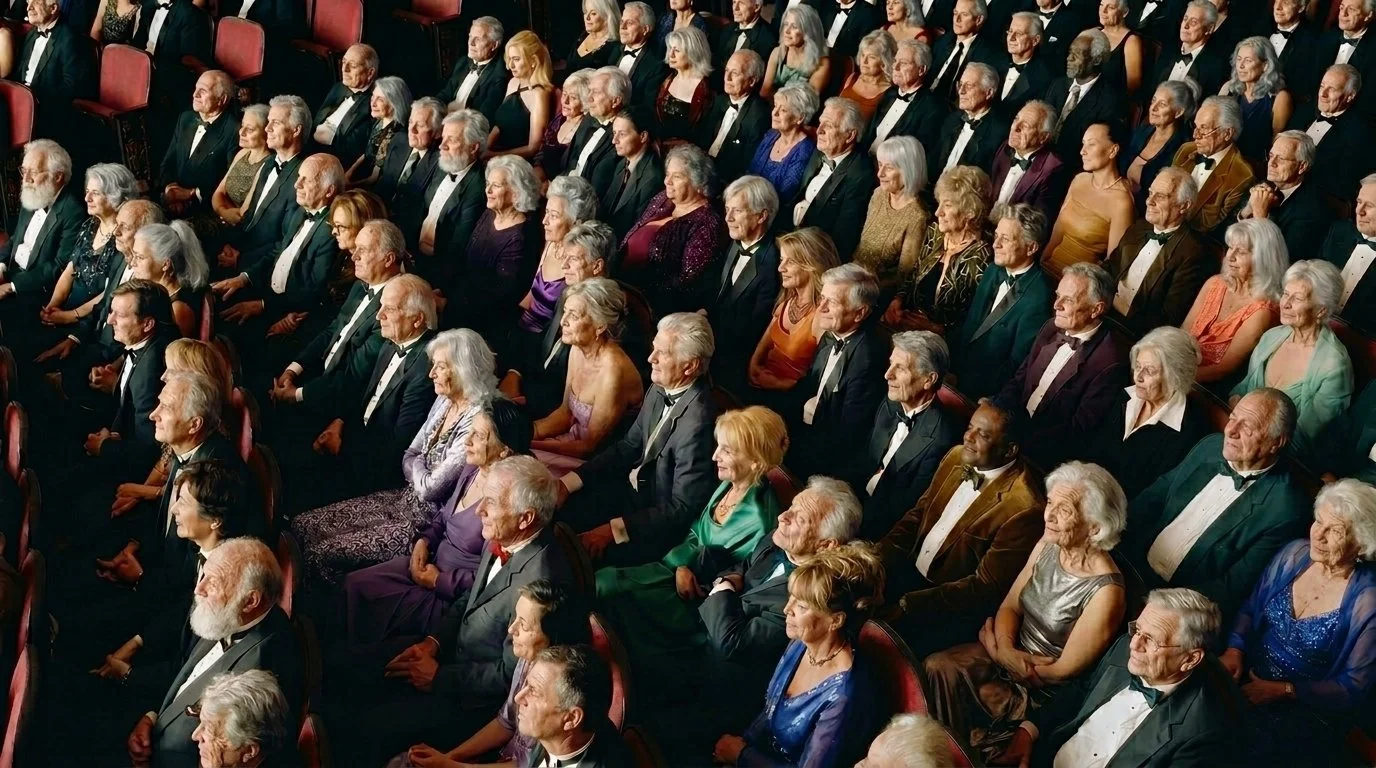
What happens when the main audience ages and it is not replace by a new generation?
As museums, orchestras, opera houses, ballet companies, and other cultural institutions look toward the future, a difficult question is beginning to emerge: what happens when the audiences that built and sustained these institutions are no longer the audiences of tomorrow? This article explores the idea that culture does not have a relevance problem, but a participation problem. Younger generations have not abandoned curiosity, stories, or meaning; they simply developed different expectations around how they discover and engage with content: more personalized, immediate, exploratory, and continuous. The challenge ahead may not be preserving culture itself, but redesigning how people build lasting relationships with it while preserving the irreplaceable value of gathering around physical places, performances, and shared experiences.
A Question Quietly Emerging Across Culture
Walk into many museums, opera houses, ballet performances, symphony halls, heritage sites, libraries, and cultural institutions and an uncomfortable question quietly begins to emerge. Many of the most loyal audiences filling these spaces today are older. That audience is extraordinary: curious, committed, generous, and deeply engaged. Entire cultural ecosystems have been sustained by generations of people who developed a lifelong habit of attending, supporting, and returning.
But a difficult question follows naturally: if these audiences built and sustained the institutions we know today, who are the audiences that inherit them tomorrow?
The easy explanation is that younger generations simply care less about culture. We hear versions of this argument often: shorter attention spans, too many screens, too much distraction. Yet when I look around, I see evidence pointing in another direction entirely.
Curiosity Did Not Disappear
People travel across countries for experiences. They spend hours following creators, stories, music, ideas, and communities. They dive into historical rabbit holes online. They obsess over identity, belonging, meaning, and discovery. Younger generations are not detached from culture. If anything, they may be intensely curious. What may be changing is not curiosity itself, but the ways people expect to encounter it.
The Habits Changed
For decades, many cultural institutions were built around remarkably stable behaviors. You arrived at a place. You followed a path. Experts presented knowledge in carefully designed sequences. You consumed the experience and eventually left. Museums, theaters, concert halls, heritage organizations, and cultural spaces refined these formats over generations.
But newer audiences grew up inside entirely different systems. Their experiences are personalized. Information is immediate. Discovery is exploratory rather than sequential. Participation often matters as much as consumption. Experiences continue before and after the event itself. This does not necessarily mean less attention. It may simply mean different expectations.
That distinction matters.
From Consumption to Participation
I do not think culture has become less relevant. I think the pathways into culture changed. For a long time, many institutions operated around a simple model: people came to us, experienced what we prepared, and left carrying memories and knowledge with them. But perhaps future audiences expect something more dynamic. They may want experiences that adapt to their interests without losing curatorial intent. Experiences that become immediate without becoming shallow. Experiences that are exploratory without becoming chaotic. Experiences that feel universal while still feeling deeply personal. Not because expertise matters less. Because participation increasingly matters more.
Culture Does Not Have a Relevance Problem
I do not mean distribution in a technological sense. I mean the ways people discover, engage with, and build relationships with culture. Museums are experiencing versions of this. So are orchestras, theater companies, ballet organizations, heritage sites, archives, and many other cultural institutions. These organizations are now operating in a world where curiosity flows differently. Not because they became less valuable, but because the surrounding ecosystem changed. The challenge may no longer be attracting audiences to a single event. The challenge may be building ongoing relationships with culture itself.
Why Physical Places Matter More Than Ever
At the same time, I do not believe the answer is replacing physical spaces. Quite the opposite. Original works still matter. Live performances still matter. Shared experiences still matter. There is something profoundly human about standing in front of a real object, hearing musicians play in the same room, sitting among strangers, and sharing time and attention together. Museums protect cultural memory. Concert halls preserve experiences that can only exist in a shared moment. Theaters, libraries, festivals, and cultural spaces create forms of connection that cannot simply migrate to screens. In an increasingly digital world, gathering around real things, in real places, with real people may become even more valuable. The question may not be whether people should still come. The question may be how we create stronger relationships before they arrive and after they leave.
What If Experiences Became Relationships?
Maybe the future cultural experience becomes less bounded by a single visit. Maybe a symphony begins weeks before the performance through stories, context, and exploration. Maybe a museum visit continues afterward through conversations and unexpected pathways. Maybe a ballet expands beyond a stage and into an ongoing relationship with movement, history, and meaning. Perhaps institutions become less like isolated events and more like companions in people's lives. Not replacing physical experiences. Strengthening the connection that brings people there in the first place.
These questions are not theoretical for me. Through my work at WonderWay, we have been exploring what happens when cultural experiences become more conversational, adaptive, and continuous. Not as a replacement for institutions, but as a way to extend curiosity before, during, and after people walk through the doors. What becomes possible when someone can follow a question wherever it leads? When a museum visit becomes more exploratory? When context travels with you? When a performance begins before the curtain rises and continues after the applause ends?
We are still early. There are far more questions than answers. But I increasingly believe the opportunity is not simply making culture digital. It is making culture feel more personal, immediate, and alive while preserving the irreplaceable value of physical spaces and shared experiences.
The Cultural Institution of 2045
I suspect the institutions that thrive twenty years from now will not simply digitize collections or adopt technology faster than everyone else. They may be the institutions that redesign participation itself. The ones that understand that younger audiences are not rejecting culture. They are asking to engage with it differently.
Questions We Are Beginning to Ask
This week, at MuseumNext, I will be joining colleagues to discuss some of the questions emerging as we experiment with new forms of interaction in cultural spaces. Not conclusions. Questions. Because cultural institutions may become some of the first places where we discover how future generations want to learn, explore, and connect. And what we learn there may extend far beyond culture itself.
Helene Alonso is a museum and technology leader who has spent over 20 years shaping how people interact with knowledge in physical spaces. She is the founder and CEO of WonderWay, a voice-first AI platform creating a new conversational layer for cultural experiences.
Her work in museums began at the early days of the web. In 1998, she developed one of the first museum websites in the world at the Museo de Ciencias in Venezuela. The project became part of the Science Learning Network, a highly selective international cohort that included institutions such as the Exploratorium and the Franklin Institute, recognizing her work among the earliest efforts to bring museums online.
Since then, she has led the creation of large-scale interactive experiences at institutions including the American Museum of Natural History, helping define how digital technologies can support learning, curiosity, and public engagement.
Today, her work focuses on the role of AI in shaping the future of cultural institutions. She teaches at New York University and continues to explore how emerging technologies can make knowledge more accessible, meaningful, and human.
Key Takeaways
Cultural institutions across museums, orchestras, opera, ballet, heritage, and live performance face a generational transition.
Younger audiences have not abandoned curiosity; they engage with culture differently.
Future audiences increasingly expect experiences that are personalized, immediate, exploratory, and ongoing.
Physical spaces remain essential because they preserve authenticity, shared experiences, and cultural memory.
The future challenge may not be preserving culture itself, but redesigning participation around it.
Institutions that thrive over the next twenty years may be those that create ongoing relationships rather than isolated visits.
Frequently Asked Questions
Why are cultural institutions concerned about aging audiences?
Many museums, orchestras, opera houses, ballet companies, and cultural organizations rely heavily on loyal audiences that have supported them for decades. As these audiences age, institutions are asking how future generations will discover, value, and sustain cultural participation.
Are younger generations losing interest in culture?
Not necessarily. Younger audiences actively engage with stories, creators, communities, music, travel, and meaningful experiences. The challenge may not be declining curiosity but changing expectations around how culture is discovered and experienced.
Why do younger audiences engage differently with culture?
Younger generations grew up with highly personalized, immediate, interactive, and participatory systems. Their expectations around exploration and engagement differ from traditional models designed around passive consumption.
What challenges do museums and cultural organizations face in the future?
Institutions increasingly face questions around audience development, long-term engagement, discoverability, personalization, and building ongoing relationships rather than one-time visits.
Why are physical museums and cultural spaces still important?
Museums preserve original objects and cultural heritage. Concert halls create shared live experiences. Cultural spaces create forms of connection that cannot fully be replicated digitally. Physical presence remains central to culture.
How can cultural institutions attract future audiences?
Future strategies may involve extending relationships before and after visits, creating personalized pathways, supporting exploration, and enabling more participatory experiences while preserving curatorial expertise.
What role can AI play in museums and cultural institutions?
AI can help create more personalized, conversational, multilingual, and exploratory experiences. When used thoughtfully, it can strengthen engagement and support discovery without replacing the value of physical cultural spaces.
What is the future of cultural institutions?
Future institutions may become less transactional and more relationship-driven. They may extend beyond single visits toward ongoing experiences that support learning, exploration, and connection.
Topics: Museums, Cultural Institutions, Museum Innovation, Audience Engagement, AI in Museums, Conversational AI, Visitor Experience, Future of Museums, Museum Technology, Digital Culture, Cultural Participation, Audience Development, Cultural Heritage, Symphony Orchestras, Opera, Ballet, Arts Innovation