
Culture Is Too Important to Leave to Algorithms
How WonderWay designs AI to deepen curiosity, strengthen trust, and support the institutions that preserve human knowledge.
A Different Philosophy for AI and Culture
Artificial intelligence is changing how people search, learn, communicate, and make sense of the world.
But culture is not information.
A museum visit, a historic site, a scientific discovery, a work of art. These are not collections of facts awaiting faster retrieval. They are human experiences shaped by emotion, memory, interpretation, and connection. They ask something of us. They resist reduction.
As conversational AI becomes woven into everyday life, the question is no longer simply what these systems can do. It is what kind of relationship they should help create between people and human culture.
That conviction is the foundation of WonderWay.
Why This Matters
The rapid adoption of conversational AI raises difficult questions for cultural institutions; questions about authority, trust, interpretation, privacy, intellectual stewardship, and the growing emotional influence of systems that increasingly speak like humans.
These are not abstract concerns to us.
WonderWay was built from within the world of museums, education, storytelling, and public cultural engagement. Many of the ideas behind this platform emerged directly from years of observing how people learn, trust, and form emotional connections inside physical cultural spaces.
We believe AI can expand access to culture, deepen curiosity, and create richer forms of exploration. We also believe these systems must be designed with genuine responsibility, not as an afterthought, but as a first principle.
Culture Is Not Content
Many digital platforms treat culture as content to be consumed: streamed, recommended, optimized for engagement, and replaced by the next thing.
We see it differently.
Art, history, science, music, architecture, literature, archaeology, and heritage are not interchangeable streams competing for attention. They are part of humanity's collective memory; artifacts of who we have been, and mirrors for who we might become.
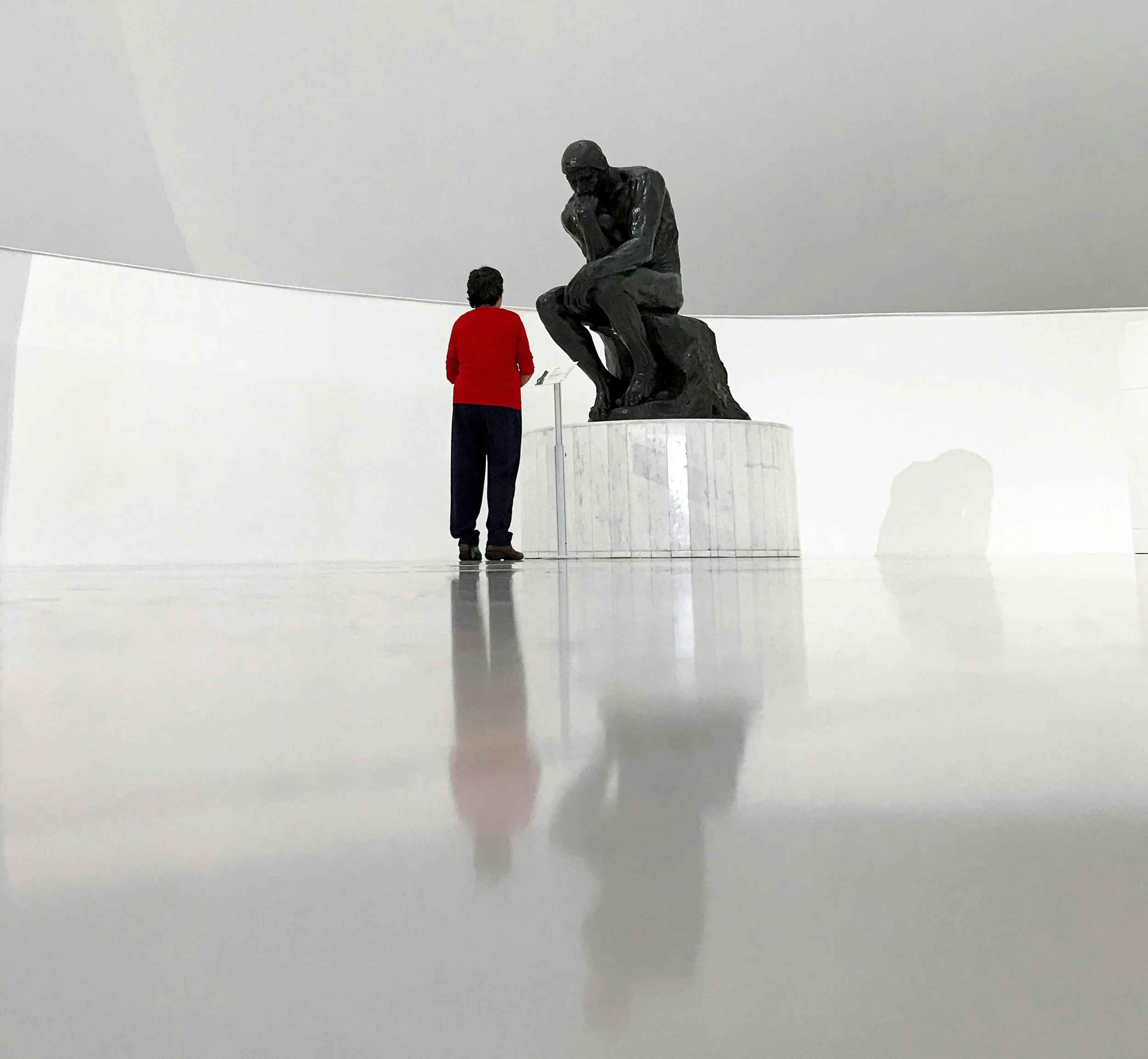
The role of AI in cultural spaces is not to overwhelm visitors with information. It is to help people connect more deeply with what they are actually experiencing. Sometimes that means a conversation. Sometimes it means a moment of quiet in front of an object that has, unexpectedly, become meaningful.
Technology should support that experience, not fill it.
Curated Knowledge Has Authority
Not all information carries the same weight.
A search result is not equivalent to the work of curators, historians, educators, scientists, archivists, conservators, and cultural institutions that have spent decades preserving and interpreting what we know. The difference is not just accuracy. Tt is context, judgment, and earned trust.
WonderWay is designed around curated knowledge systems that prioritize trusted institutional and expert sources. When institutions work with WonderWay, they retain ownership of their collections, narratives, and interpretive voice.
AI should extend human expertise, not quietly displace it.
Designed for Presence, Not Distraction
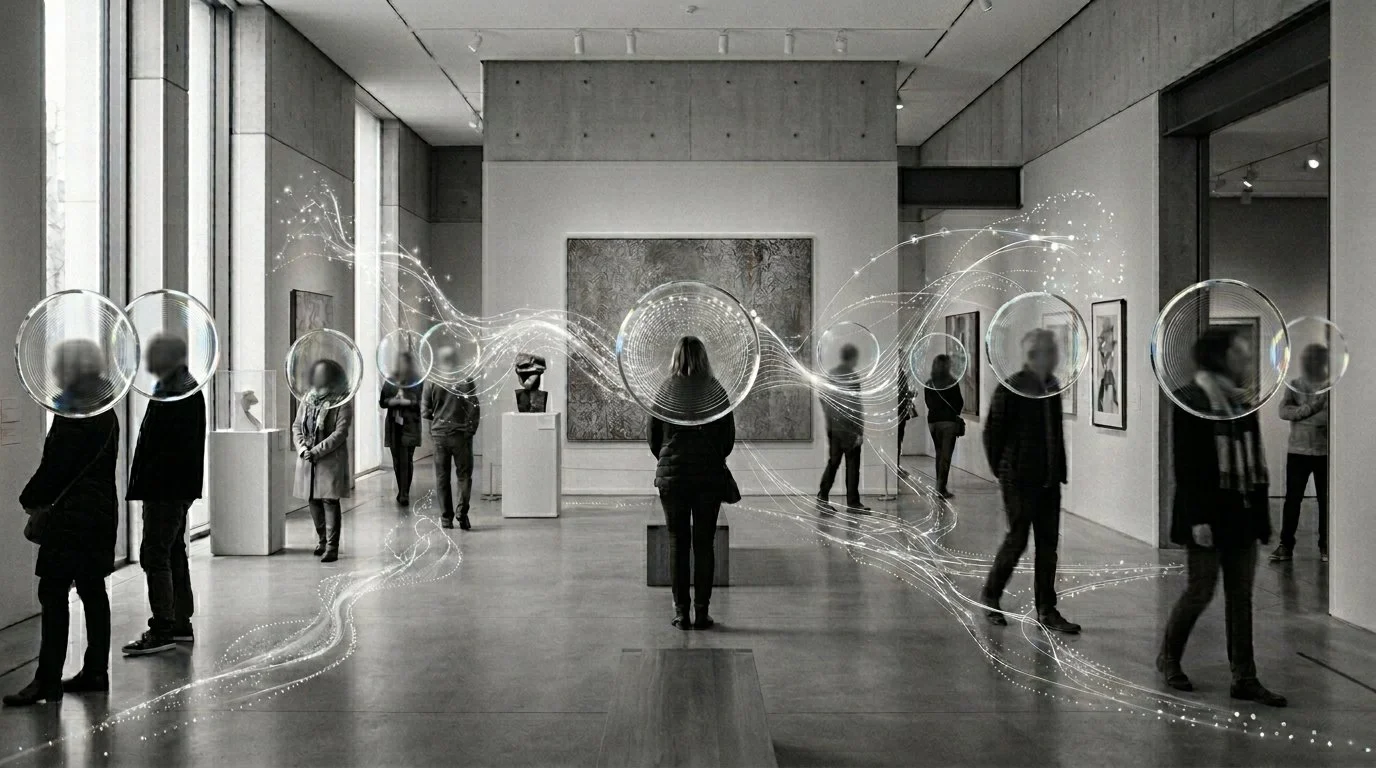
Most modern technologies compete aggressively for attention. Cultural experiences require something different: contemplation, emotional space, and attention directed toward the physical world rather than a screen.
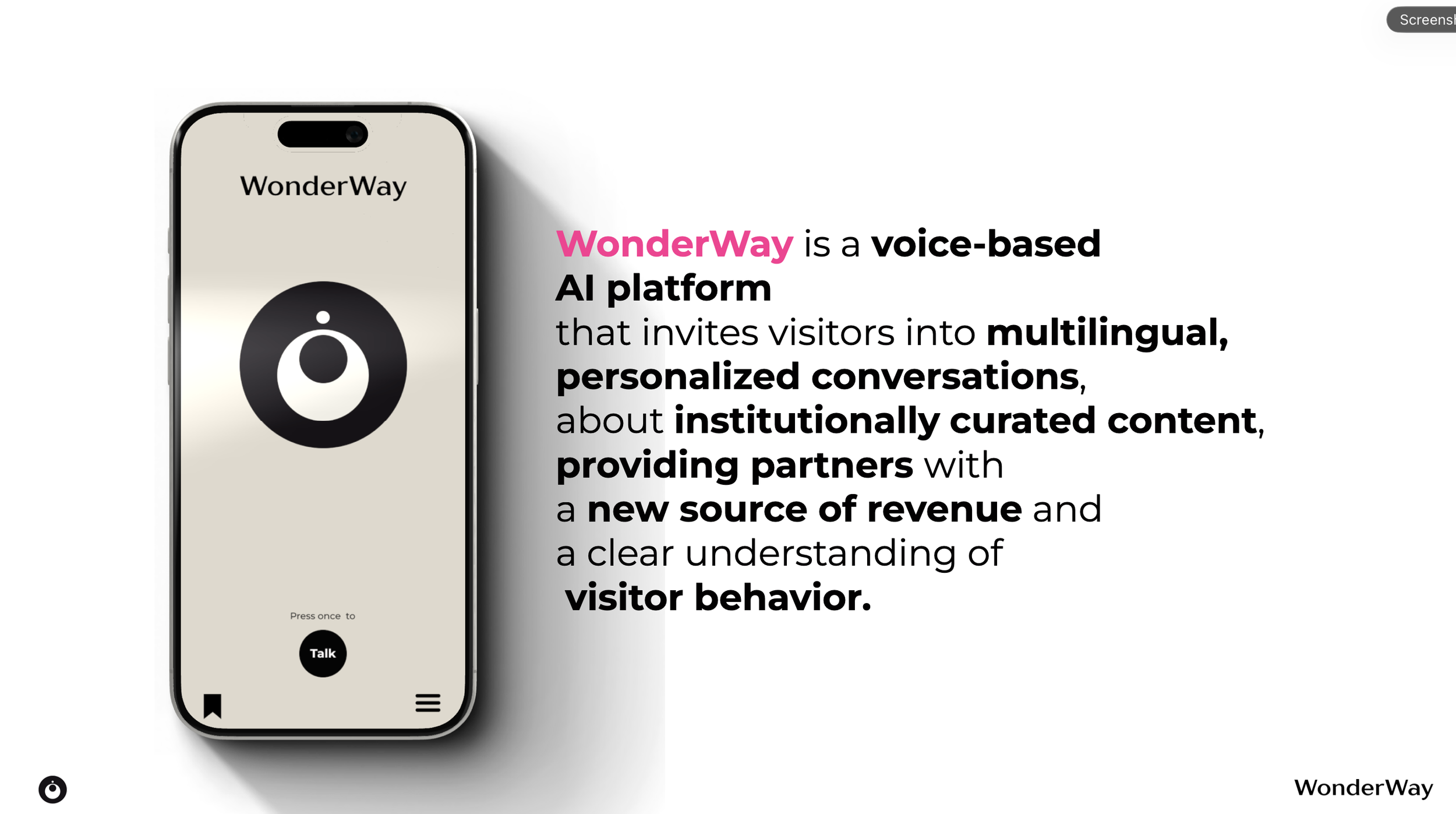
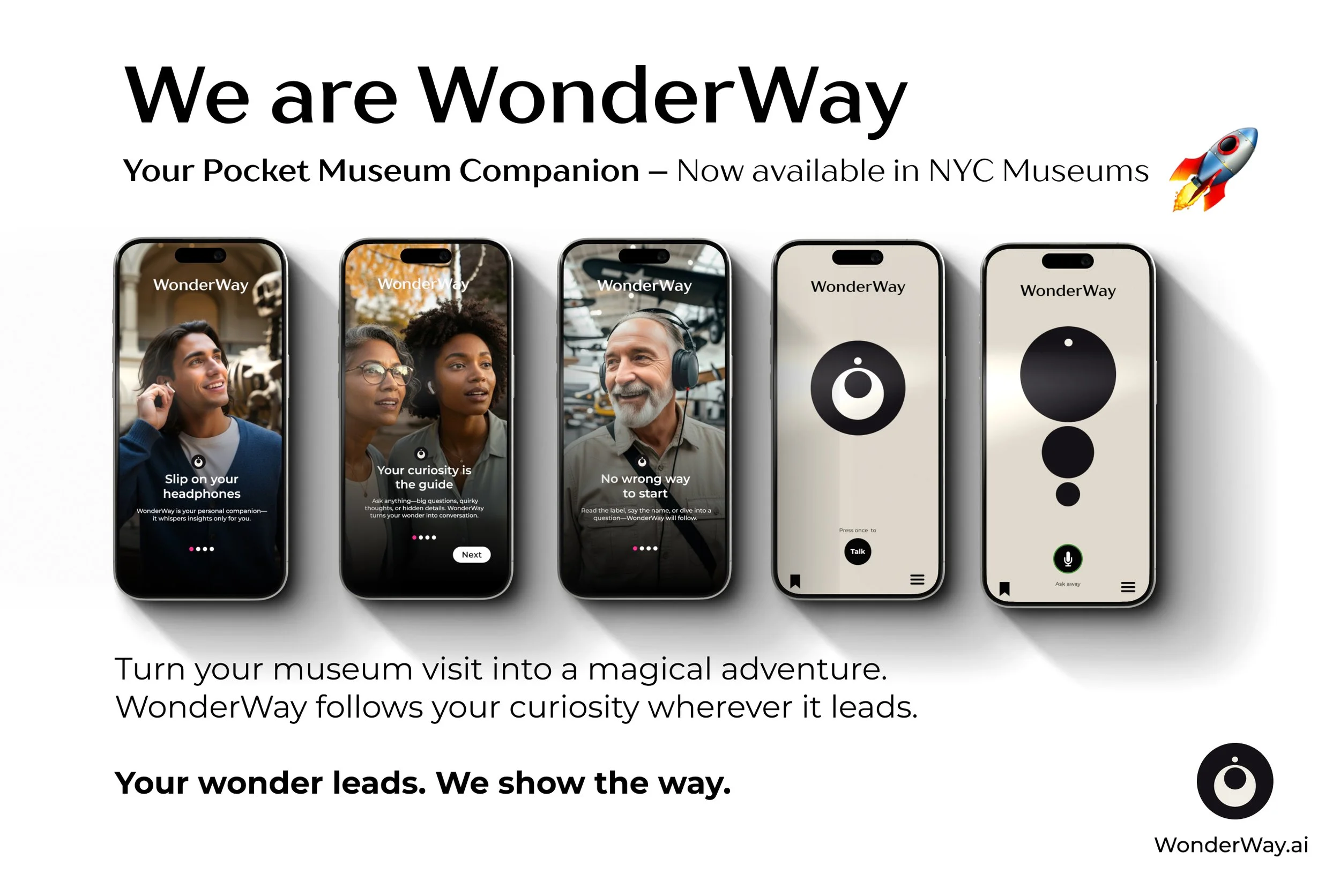
That is why WonderWay is voice-first.
Visitors should be looking at the world around them, at the painting, the fossil, the artifact, not navigating an interface. The goal is not to increase screen time. It is to support curiosity while allowing people to remain present.
The most successful AI experience is not the one that speaks the most. It is the one that helps visitors become more curious, more observant, more moved and then steps back.
Transparency Over Fabricated Authority
Conversational AI can sound confident even when it is wrong. In educational and cultural environments, that tendency is not merely inconvenient, it is a form of broken trust.
WonderWay is designed to reduce hallucinations by grounding responses in curated institutional knowledge. It is also designed to communicate uncertainty honestly, rather than projecting false authority.
Visitors deserve to know when they are talking to a machine. Institutions deserve visibility into how their knowledge is being interpreted and presented. Trust is not a feature that can be added later, it must be built into the architecture from the beginning.
The Right to Explore Without Being Watched
People should be able to explore culture without feeling surveilled.
WonderWay does not sell personal visitor data. Voice interactions are processed to enable conversation, not to construct advertising profiles or behavioral targeting systems. When analytics are used, they serve institutions in understanding aggregate patterns of curiosity and engagement, not in identifying individuals.
We believe cultural exploration should remain intellectually and personally free. As AI becomes more deeply embedded in daily life, protecting the autonomy of that exploration becomes an act of respect, for the visitor, and for culture itself.
Access Is a Form of Justice
Cultural spaces can feel inaccessible through language barriers, educational expectations, disability, geography, or the unspoken social codes about who belongs.
Conversational AI, designed thoughtfully, can help lower some of those barriers. WonderWay supports multilingual interaction and natural conversation because curiosity does not require academic fluency or cultural familiarity. A child asking an unexpected question deserves the same depth of engagement as a scholar.
Technology should open cultural spaces. It should never be the lock.
Emotional Influence Requires Accountability
As AI becomes more conversational, people naturally begin to assign it personality, authority, and emotional meaning. That influence is real and it carries real responsibility.
WonderWay is not designed to maximize dependency, exploit attention, or encourage the kind of passive, frictionless consumption that makes people feel engaged while keeping them at a distance from actual experience.
Our purpose is the opposite: to help people form stronger, more considered relationships with culture, history, science, and ideas. To encourage curiosity and reflection rather than replace them with convenience.
Respect for Institutions and Their Work
Museums, libraries, archives, educators, scientists, artists, historians, and cultural organizations create enormous intellectual and social value. That work should not be treated as invisible raw material for AI systems to extract and repurpose without acknowledgment.
The future of cultural AI must be collaborative, not extractive. That means respecting intellectual property, curatorial context, institutional voice, and the layers of expertise embedded in cultural knowledge.
AI should strengthen these institutions not quietly hollow them out.
The Future We Are Building Toward
The next generation of cultural experiences will be more conversational, more personalized, more accessible across languages and backgrounds. That future is already arriving.
But technology cannot determine what culture is for. Only people can do that.
WonderWay exists to help people feel more connected to art, to science, to history, to ideas, to one another. To make humanity's cultural heritage more accessible without making it disposable.
That is the future we are building.
One conversation at a time.
Why WonderWay?

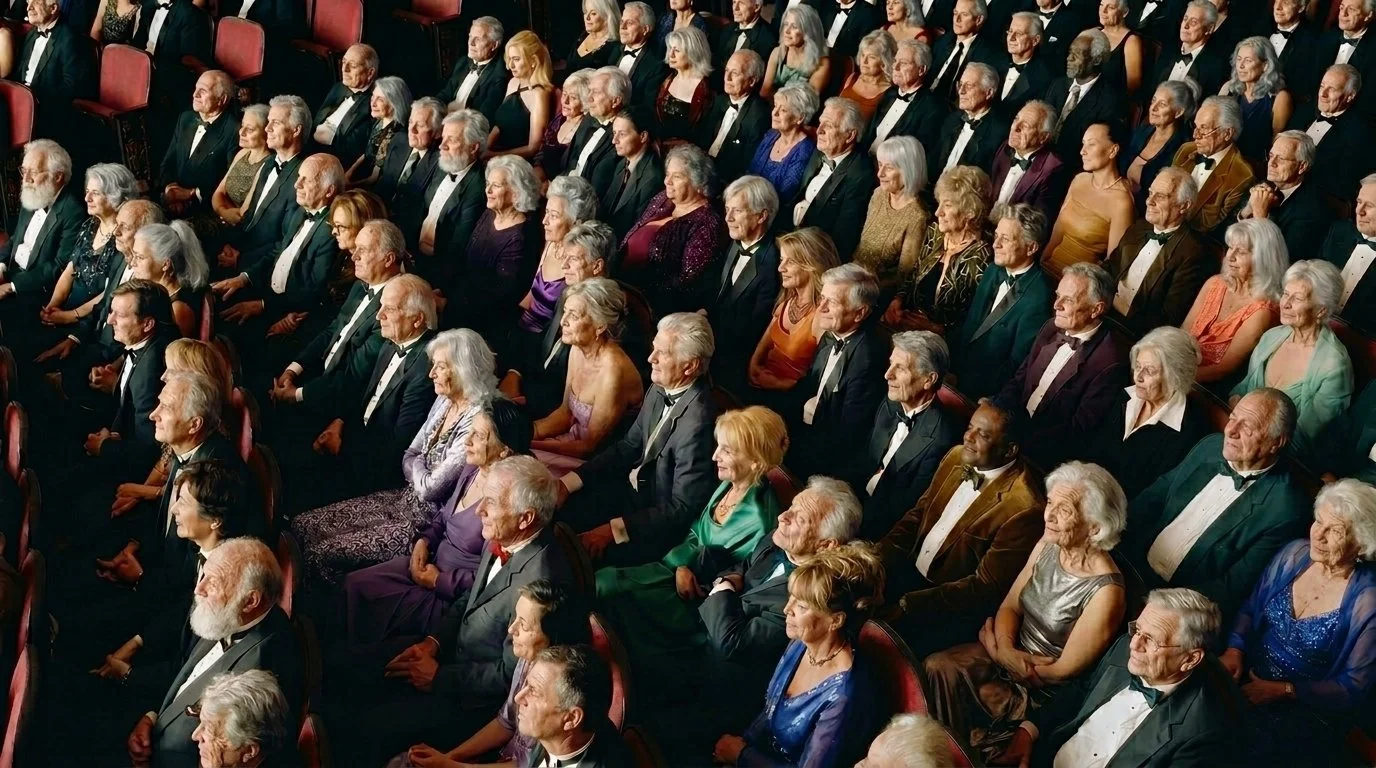
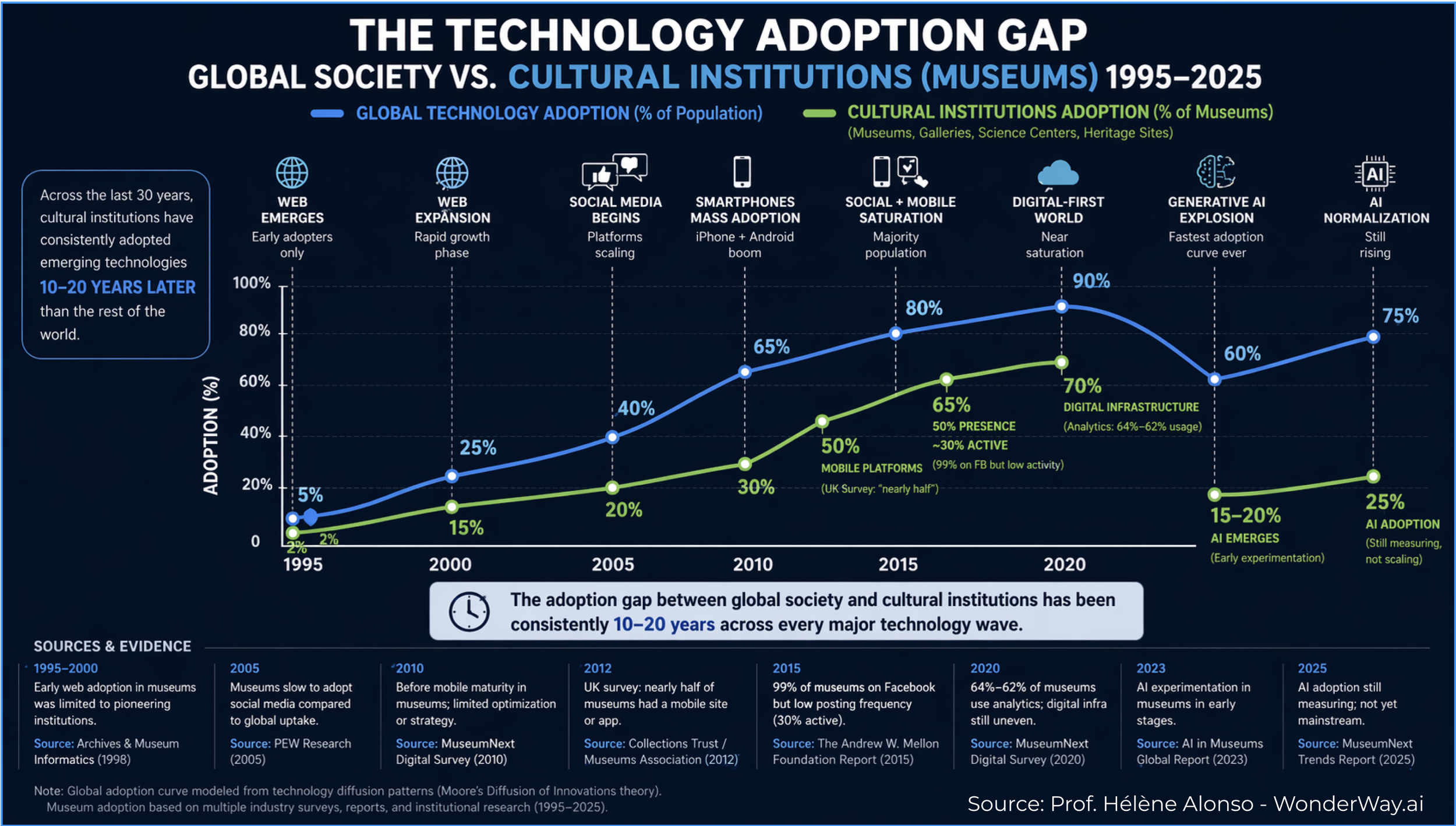
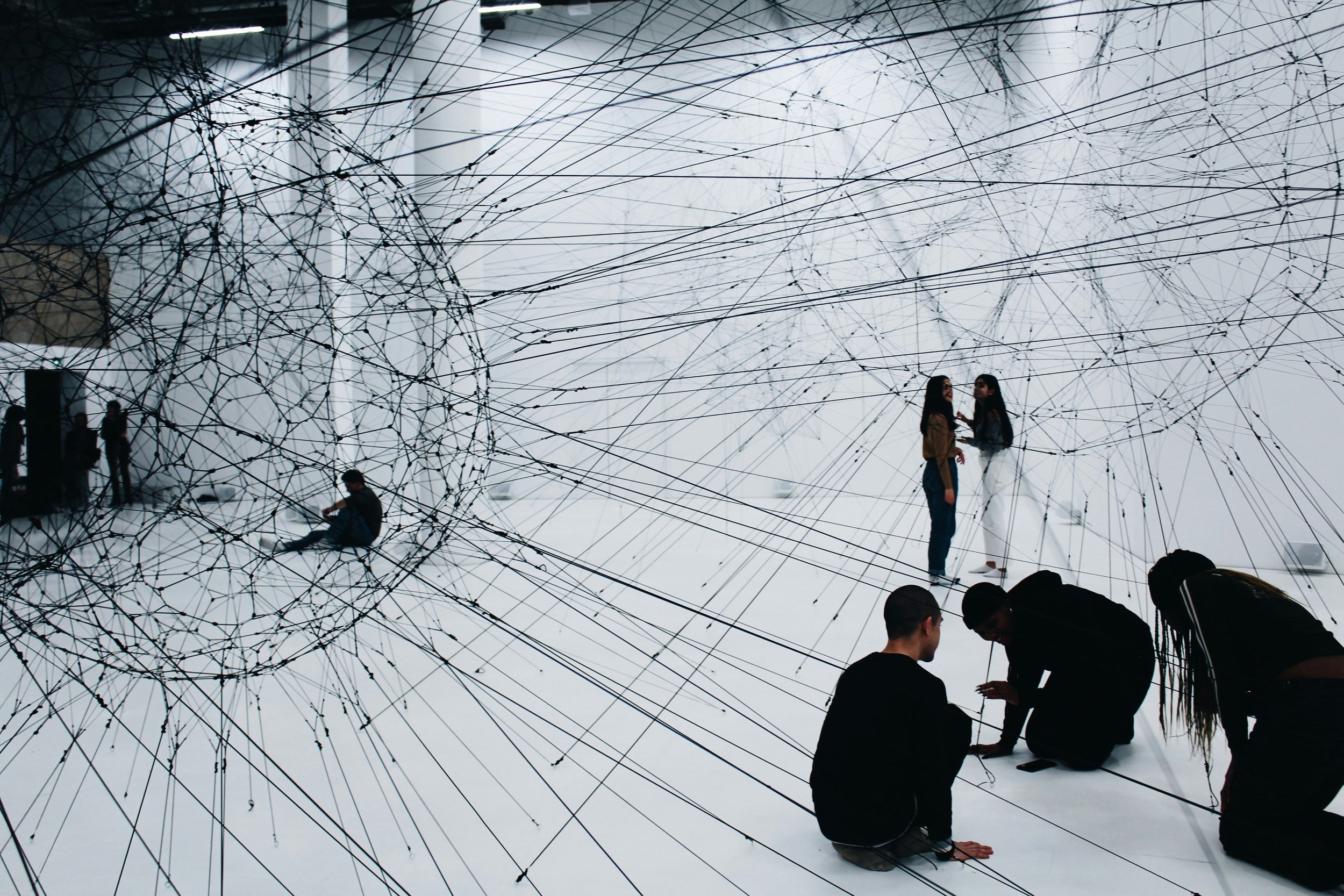





Museums are still full, but their audiences are aging. As digital access transformed libraries, museums must now reinvent how visitors connect with their collections, moving beyond static displays toward more engaging, dynamic storytelling to remain relevant for future generations.